
Why Commodities Trading Volumes Are Climbing as Inflation Stays Unpredictable
The trading floor was once an institution. Uncertainty tends to redirect capital. When inflation is erratic and fails to follow the smooth projections of central banks and economists, investors scramble to find assets that hold intrinsic value rather than rely on institutional faith. That search has pointed increasingly toward raw materials, agricultural products, and energy markets, and the participation figures have reflected that shift. The presence of trading in commodities has been increasing in various regions not just due to a single factor but as a result of a combination of various forces which show no sign of dissipating.
One feature that distinguishes the present-day environment is the variation of inflation among different economies. Food price surges have dominated in certain countries. In others, energy costs have forced households and corporations to restructure budgets over several years. A fuel importer in Pakistan, a wheat farmer in Ukraine, a manufacturer in Germany have all been affected by inflation from vastly different perspectives, but have all contributed to a broad recalibration of the value of commodity exposure. When the prices of physical goods rise unpredictably, the case for holding positions tied to those goods becomes harder to dismiss.
This relationship is not new to institutional players, but the shift among independent and mid-sized investors is what makes the present period unique. Futures and spot markets now available to retail participants have opened access to raw material exposure that was not practical before. A Brazilian retail investor can now buy and sell Brent crude or Chicago wheat as easily as equities. Brokers have kept pace with this expansion in access and have begun to increase the amount of educational material and reduce minimum deposit requirements to attract a broader client base.
A generational dimension also deserves consideration. Investors who entered financial markets after 2008 watched central bank interventions redefine asset prices in ways classical models could not predict. Many grew healthily skeptical of paper-based instruments and paper-based promises. Commodities trading offered something more tangible, more physical, even if the mechanics of futures contracts are anything but straightforward. The psychological appeal matters, even when elaborate strategies underpin the trade. Traders in this space often rely on TradingView charts to monitor price action across energy and agricultural markets, where visual pattern recognition plays a meaningful role alongside macro analysis.
Supply chain disruptions have further strengthened the argument. The years after the global pandemic demonstrated how vulnerable logistics networks are and how easily a lack of physical goods turned into price volatility. Traders who had positioned themselves in agricultural or industrial commodity markets during that period gained first-hand experience of how uncorrelated these instruments can be with equity markets. That experience has not faded from institutional memory and continues to influence allocation decisions today.
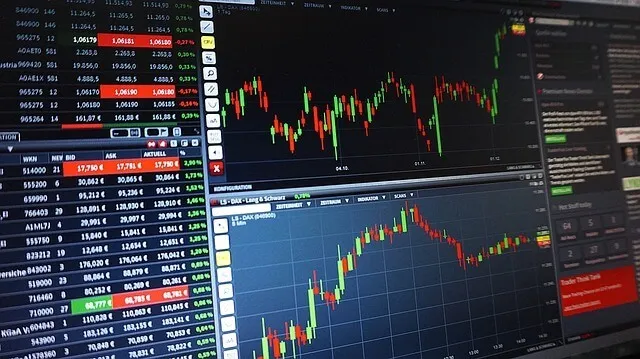
Image Source: Pixabay
The result is a sharper focus on risk management. The volatility that makes commodities a good inflation hedge is the same volatility that introduces sharp drawdowns that catch unprepared traders off guard. Oil markets have already demonstrated the capacity to shift radically within a few days depending on geopolitical events, supply data shifts, or demand projections. Navigating that environment requires both technical discipline and a clear-eyed view of the macroeconomic forces at work.
What appears increasingly clear is that the rise in participation is structural rather than cyclical. The appeal of physically scarce assets will not fade as long as inflation remains difficult to forecast and central bank credibility stays in question. Whether tracking soft commodities or energy futures through TradingView charts, participants are approaching these markets with greater analytical rigor than in previous cycles. Commodities trading has moved from the fringes of financial markets into mainstream discussion, and the investors who are finding themselves in that discussion are more diverse, better informed, and more widely spread around the world than ever before.

Comments