
Understanding Currency Pair Relationships in Forex Trading
Many beginners start trading with the idea that every currency pair behaves independently. They open a chart, study its movement, and assume that what happens on that screen is completely separate from everything else happening in the market.
At first, this seems reasonable.
A chart appears to tell its own story. Prices rise, prices fall, and traders focus on analysing that individual movement. After spending more time around markets, however, many people begin noticing something interesting. Certain currency pairs sometimes move in similar directions, while others appear to move differently or even opposite to one another.
For people trying to understand what is forex trading, learning about these relationships can create a broader understanding of how the market behaves and why some movements appear connected.
Currency pairs are linked because they often share common currencies and react to similar economic influences. If one currency becomes stronger or weaker because of changing economic conditions, that effect may appear across several different pairs at the same time.
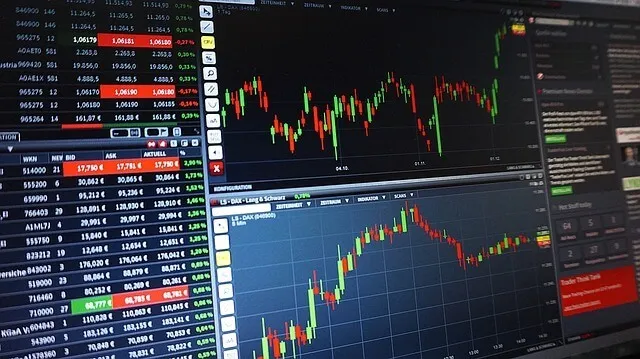
Image Source: Pixabay
For example, if a particular currency experiences stronger demand, multiple currency pairs involving that currency can begin showing related movement.
This is one reason traders sometimes notice that markets do not move completely in isolation.
Common examples of relationships traders observe include:
- Currency pairs moving in similar directions
- Currency pairs moving in opposite directions
- Multiple pairs reacting to the same economic event
- Shared currencies influencing several markets simultaneously
- Market sentiment affecting broader currency movement
These relationships do not remain fixed all the time, but they can provide useful context.
For someone learning what is forex trading, understanding relationships between currency pairs can help explain why market movement occasionally appears larger than expected.
Economic conditions also play an important role.
Currencies are connected to countries and economies, which means factors such as interest rates, inflation, employment reports, and economic growth can influence how currencies behave.
When economic expectations change, reactions may spread across multiple markets rather than affecting only one pair.
For example, an important economic report involving a major economy may create reactions across several related currency pairs at once.
This sometimes creates situations where traders see movement appearing across multiple charts during similar periods.
Beginners occasionally find this confusing because they may expect only one currency pair to react.
Another important point is that relationships can change over time.
Many people assume that if two pairs moved together previously, they will always continue behaving that way.
Markets rarely remain that simple.
Economic conditions change.
Global events create new expectations.
Market sentiment shifts.
Because of this, relationships between currency pairs can strengthen, weaken, or temporarily disappear.
Understanding this helps traders avoid assuming that market behaviour always follows the same pattern.
Experienced traders often use these relationships to gain additional perspective rather than relying entirely on a single chart.
Instead of only asking where one pair may move, they sometimes ask broader questions:
Are other related pairs behaving similarly?
Is there wider currency strength or weakness developing?
Could economic factors be influencing several markets at once?
These questions can provide extra context for decision making.
In the end, understanding what is forex trading involves recognising that currency pairs often behave as part of a larger system rather than completely separate markets. Currency relationships can help traders develop a wider view of market behaviour and better understand why movements sometimes occur across several pairs at the same time.

Comments